

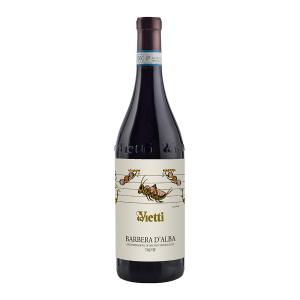
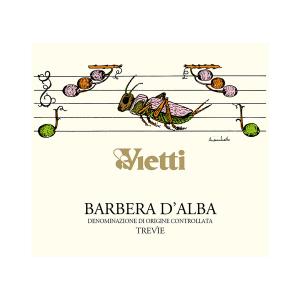
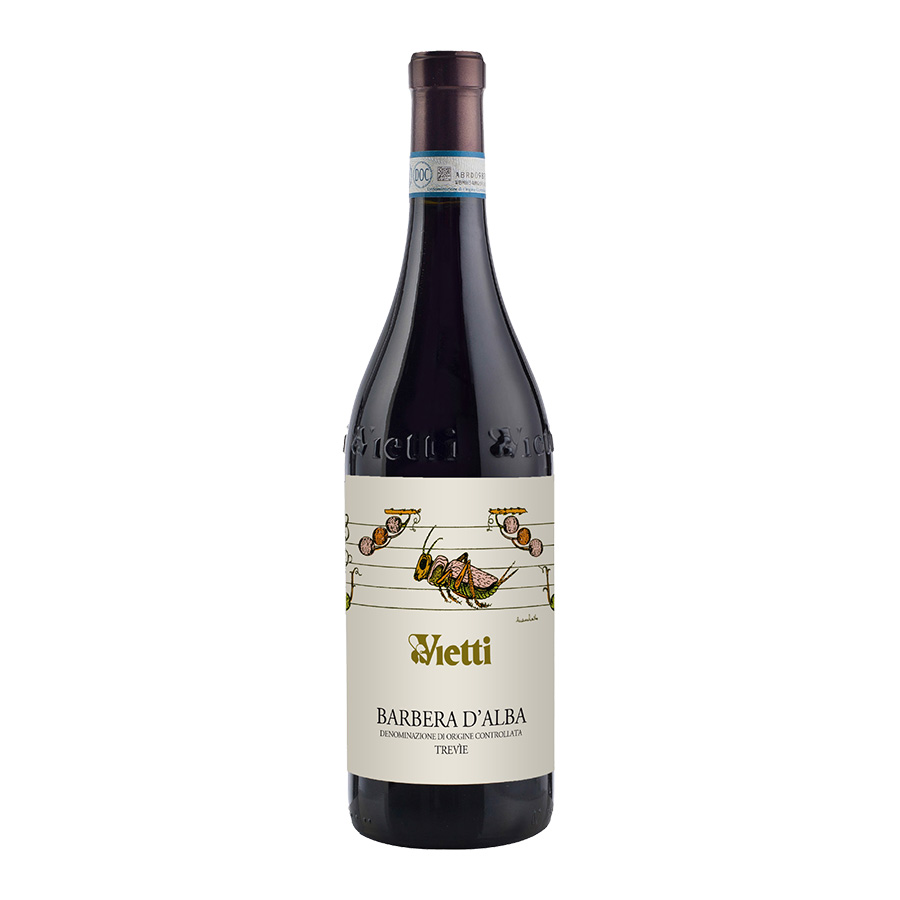
Vietti Barbera d’ Alba Tre Vigne | Barbera d’ Alba DOC Dry Red Wine (2022) 750ml | Vietti
Vietti Barbera d’ Alba Tre Vigne 14%alc., Still, Dry, Italian Red Wine, Barbera d’ Alba DOC - Vietti
Barbera d'Alba "Tre Vigne" Red Dry Wine Barbera 2022 750ml / Vietti
Designation: Barbera d’Alba DOC
Grape variety: 100% Barbera
Winemaking: alcoholic fermentation lasts approximately 2 weeks and takes place in stainless steel tanks with frequent délestages and daily pumping overs. Malolactic fermentation is done in steel tanks.
Description: ruby red color with ripe red cherry and vanilla aromas. Notes of violets and rounder body compared to Barbera d’Asti Trevìe. On the palate it shows bright acidity, sweet tannins with balanced integration of oak. Good complexity and a lingering cherry finish.
Ageing: approximately 1 year between barriques, big casks and stainless steel tanks.
Food Pairings: Antipasti, rich salads, grilled seasoned vegetables, hearty soups/stews, pastas or with breaded veal, pork, chicken with light sauces.
Color: Red
Variety: Barbera
Appellation: Barbera d’Alba DOC
Region: Piemonte
Type: Dry
2022 Vintage
The two thousand and twenty-two vintage will be remembered as having been one of the earliest and most surprising of all: early because we can consider harvesting operations as having finished by the beginning of October, and surprising because - considering the climate conditions - the vines in the Langhe showed once again their unrivalled capacity for adaptation. Unusual weather was seen right from early winter, when there was a shortage of rainfall and the climate was mild. The beginning of the growing season was in keeping with patterns over recent years, but one week earlier than the previous vintage. What was clear from the outset was the lack of water reserves in the ground. Moreover, spring continued marked by good weather, with no significant rain, and this helped to offset the early plant growth, so the timing of bud break was standard for all varietals. Temperatures in April and May were in line with seasonal averages, confirming the very low rainfall trend. Higher maximum temperatures than in the past from the end of May lasted throughout June, and along with the low amount of rainfall the high temperatures brought about a new acceleration in the physiological development through to flowering, which took place ten days earlier than the average, before mid-June. The month of July saw a continuation of the trend of fine weather and high temperatures: the vines adjusted on their own to the low availability of water, showing less vegetative growth due to the absence of suckers, and smaller clusters. On the other hand, no fungal attack issues were seen, and vineyard management proved to be relatively straightforward. Particularly important was correct management of the foliage and canopy to deal with the long sunny periods in summer, providing shade for the grapes and preventing any damage associated with burning due to direct exposure to the sun. Picking began as early as the end of August with the grapes used for making sparkling wines, and continued immediately afterwards with the white wine varieties. The quality was noticeably excellent, whereas the situation with regard to yields was very mixed: while production was par for the course on average without green harvesting, in some of the hotter, more southerly-facing areas it was lower. In early September the white wine grapes showed excellent sugar levels, and a good acid profile with a diminishing trend, which led most producers to start harvesting early to preserve the aromas. The Dolcetto and Barbera grapes were well-balanced, with very interesting prospects. This was especially true for the latter, which maintained their freshness despite thesummer heat. Although the average size of the Dolcetto berries was smaller, the variety can count on excellent sugar levels and a sufficient accumulation of anthocyanins to allow for colour and big structure. Once again Nebbiolo demonstrated its unique connection with the area, surprisingly managing to adapt perfectly to the climate conditions. Technologically, it showed itself to be nearly ready for picking by the middle of September, while its growing phenolic maturity stabilized in all areas around the twentieth, allowing the harvest to begin. The berries were smaller than usual, so the pulp-skin ratio seems to favour the latter. This should ensure better extraction of the tannins and aromatic substances, facilitated also by the excellent alcohol content which helps the process during maceration. In view of the other indications, full-bodied wines with excellent long-term ageing potential can be expected if attention is paid to preserving the acid profile during vinification.